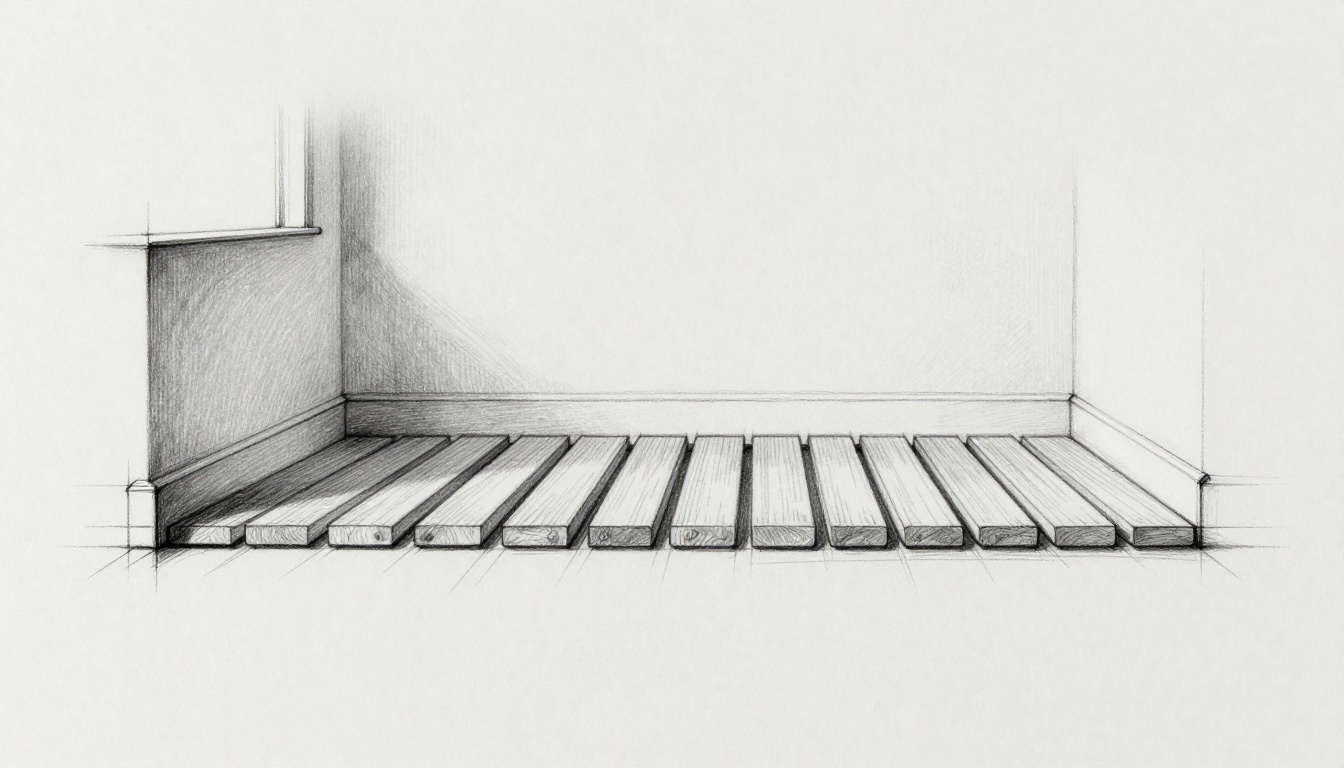
Picture this. You step onto your home’s floor, and it bounces like a trampoline. That uneasy give makes you wonder if the whole thing might collapse. Joist spanning decides if floors stay firm or turn wobbly.
Joists form the backbone of floors, ceilings, and roofs. Spanning means the distance each joist stretches between supports. Spacing sets how far apart you place those joists side by side, often 12, 16, or 24 inches. Get it wrong, and you risk sags, cracks, or worse. Proper choices ensure safety, cut repair costs, and save on materials. This guide uncovers the load-bearing physics, deflection rules, and key factors. You’ll learn steps to nail perfect spacing for any build.
What Is Joist Spanning and How Does Spacing Affect Stability?
Joists act as horizontal supports under floors or roofs. They carry weight from above and transfer it to walls or beams. Spanning covers the clear distance a joist runs without middle support. For example, a 14-foot span means the joist bridges 14 feet end to end.
Spacing measures the gap between joist edges, measured on center. Common setups use 16 inches on center. Closer spacing, like 12 inches, means more joists per foot. This setup shares loads better across the group. Therefore, the floor feels stiffer and handles weight without much bend.
Think of it like ropes on a bridge. One tightrope sways under a walker. Add parallel ropes close together, and the bridge stays steady. Joists work the same way. Wood bends under stress but holds if not overloaded. Shear forces try to slide layers apart, yet good spacing fights that.
Wider spacing saves wood but risks bounce. Physics shows bending stress grows with span length and load. Closer joists cut individual stress. As a result, the whole system gains stability.
The Role of Load Distribution in Preventing Sags
Loads split into live and dead types. Live loads include people, furniture, or snow. Dead loads cover the floor itself, like plywood and joists. Even spacing spreads these evenly.
Imagine a picnic table. Legs too far apart concentrate weight and tip. Legs closer handle the crowd better. Joists follow suit. Poor spacing creates hot spots where one joist takes extra punishment. Over time, that leads to cracks or dips.
Proper distribution keeps sags away. Each joist pulls its share, so none weakens first. This balance boosts long-term strength.
Deflection Basics: Why Joists Bend and How Far Is Safe
Deflection means the downward bend or bounce you feel. Codes limit it for comfort and safety. A common rule allows span length divided by 360. So a 12-foot span deflects no more than 0.4 inches.
Wider spacing amps up deflection risk because fewer joists share the bend. Stiff floors pass the “heel drop” test, no big rebound. Bouncy ones signal trouble ahead.
For instance, 24-inch spacing suits light roofs. Floors demand tighter 12 or 16 inches for solid steps.
Key Factors That Dictate Your Joist Spacing Choices
No universal spacing fits every job. Choices hinge on materials, loads, and site conditions. Understand these, and you pick wisely for stability.
Wood species matters first. Strong ones like Douglas fir resist bend better than spruce. Grades range from select structural, top quality, to utility, basic stuff. Higher grades permit wider spacing due to fewer flaws.
Engineered joists, like I-beams, stretch farther with less sag. They suit modern builds.
Loads drive decisions too. Residential floors see 40 pounds per square foot live load, plus 10 dead. Garages double that. Heavier totals force closer spacing.
Span length ties in. Longer runs need narrower spacing or beefier lumber. Codes adjust for snow in northern areas or quakes elsewhere. Always check local rules.
Environment plays a part. Wet climates swell wood, cutting strength. Dry spots shrink it. Factor those in for true stability.
Wood Type, Grade, and Strength Ratings
Douglas fir boasts high stiffness, measured by modulus of elasticity around 1.9 million psi. Pine lags at 1.4 million. Select grades have straight grain, few knots.
Higher ratings mean wider spacing options. For example, No. 1 grade 2x10s span farther than No. 3 at same spacing.
I-joists combine wood flanges with OSB webs. They handle 20-foot spans at 16 inches on center.
Live and Dead Loads: Calculating What Your Floor Must Hold
Add live and dead for total design load. A bedroom totals 50 psf. Kitchens hit 60 with cabinets.
Formula stays simple: total load times area gives force per joist. Closer spacing cuts that per piece. So garages at 24-inch spacing use stronger joists.
Span Length and Building Code Rules
Double the span, and strength needs quadruple. Codes like IRC set maxes. A 2×12 at 12 feet on center might drop to 10 feet at 24 inches.
Snow adds 20 to 60 psf in cold zones. Seismic areas demand bracing.
Step-by-Step Guide to Finding the Perfect Joist Spacing
Start with your project specs. Use span tables from lumber groups or apps. They’ll match spacing to your setup. Consult pros for big or odd jobs.
Step 1: Measure Your Span and Assess Loads
Measure clear span wall to wall, subtract any beams. Note live and dead loads from code books. A 13-foot bedroom span with standard 40 psf live load sets the baseline.
Step 2: Pick Materials and Check Span Tables
Choose lumber size, like 2×10 Douglas fir. Tables show max span per spacing. At 16 inches on center, it might cover 15 feet 8 inches. Adjust for grade.
Free charts online confirm this. Tweak for your species.
Step 3: Factor in Codes, Adjustments, and Safety Margins
Verify local codes. Add 5 percent for humid spots. Use continuous spans over simple for extra reach. Build in 10 to 20 percent buffer. Install now, thank yourself later.
Real-World Examples, Common Pitfalls, and Pro Tips
Home floors often run 16 inches on center with 2x10s. That handles daily life without bounce. Open kitchens tighten to 12 inches for heavy islands.
Roofs allow 24 inches where strength trumps stiffness. Always brace ends.
Residential Floors vs Roof Joists: Spacing Differences
Floors prioritize no-deflection feel, so 12 to 16 inches rules. Roofs focus on load carry, wider 24 inches works with rafter ties.
A 20-foot roof span at 24 inches uses 2x8s. Floor same span needs 2x12s at 12 inches.
Top Mistakes That Lead to Unstable Structures
Over-spanning ignores tables, causes creaks. Wrong grade brings weak knots. Skip bracing, and joists twist.
Fixes start with checks. Consequences include costly fixes or fails.
Pro tips: Use metal hangers for ends. Block between joists midway. Inspect for damage pre-install.
Mastering joist spanning boils down to loads, materials, and codes. Balance those with smart spacing, and your build stays stable for decades.
Grab a span table today. Run the numbers for your next floor or roof. You’ll save headaches and boost safety. What’s your current project? Share in comments below. Solid choices now mean a home that lasts.